Healthcare providers continue to face increasing operational demands. While clinical teams focus on delivering quality care, administrative departments manage scheduling, billing, insurance verification, documentation, and compliance requirements. As workloads grow, many organizations struggle to maintain balance between these responsibilities.
This growing divide affects productivity, employee satisfaction, and patient experiences. Administrative teams often work under constant pressure to complete tasks accurately and on time. Meanwhile, clinical staff depend on efficient support systems to provide uninterrupted care. As a result, many healthcare organizations are exploring healthcare back office outsourcing to strengthen operations and reduce administrative burdens.
Why Administrative Demands Continue to Increase
Healthcare organizations operate in an environment that requires extensive documentation and coordination. Consequently, administrative workloads continue to expand.
1. Insurance Processes Require Significant Attention
Insurance verification, claims management, and payment follow-ups involve multiple steps. Therefore, administrative teams spend considerable time checking information, correcting errors, and ensuring that records meet payer requirements.
These responsibilities can quickly consume available resources, especially when teams process large numbers of claims and patient requests.
2. Documentation Requirements Continue to Grow
Healthcare providers must maintain detailed patient records and operational documentation. While these records support quality care, they also increase administrative workloads.
As a result, teams often face mounting responsibilities. They must keep information accurate, update records, and meet reporting requirements while handling other daily tasks.
3. Patient Expectations Are Changing
Patients expect timely responses, convenient scheduling, and accurate information. Therefore, healthcare organizations must dedicate resources to maintaining strong communication channels.
Meeting these expectations requires consistent administrative support across phone calls, appointment requests, registration, and follow-ups.
4. Regulatory Requirements Demand Accuracy
Healthcare organizations must comply with numerous regulations and reporting requirements. Consequently, administrative teams must carefully manage documentation and processes.
Even small errors can create operational challenges. Providers need reliable procedures to protect patient information and maintain accurate records.
5. Workforce Shortages Affect Administrative Functions
Many healthcare providers continue to face staffing challenges. Therefore, existing employees often assume additional responsibilities.
This situation can increase stress and reduce efficiency. When administrative teams have too much work, routine tasks may take longer to complete.
The Centers for Medicare & Medicaid Services recognizes that unnecessary administrative processes can take time away from clinicians and patients. Its Optimizing Care Delivery Framework discusses ways healthcare organizations can simplify workflows and reduce administrative demands.
How Administrative Burdens Affect Patient Care
When administrative demands increase, clinical operations often feel the impact as well. Delays in registration, documentation, and communication can affect how quickly patients receive services.
1. Slower Workflows Create Delays
Administrative bottlenecks can affect scheduling, patient intake, and billing processes. Consequently, patients may experience delays before receiving services.
These disruptions can affect satisfaction levels and make it harder for healthcare teams to manage daily patient volumes.
2. Employee Burnout Becomes More Common
Heavy workloads can lead to stress across departments. Therefore, employees may struggle to maintain productivity and engagement.
Over time, burnout can contribute to turnover. When experienced staff members leave, remaining employees must handle additional work while new hires are trained.
3. Clinical Teams Face Additional Administrative Tasks
Healthcare professionals often assist with documentation and operational requirements. As a result, they may spend less time focusing on patient care.
This shift can affect efficiency throughout the organization. It also places additional pressure on professionals whose main responsibility is providing clinical services.
4. Communication Challenges Increase
Administrative teams serve as important communication hubs. However, staffing limitations and growing workloads can create delays.
Consequently, patients may experience frustration when seeking information about appointments, insurance coverage, or other services.
5. Operational Costs Continue to Rise
Managing expanding workloads often requires additional staffing and resources. Therefore, healthcare organizations must find ways to improve efficiency without sacrificing quality.
Hiring more employees is one option, but it may not always be practical. Providers also need to review existing workflows and determine which responsibilities can be handled more efficiently.
The Benefits of Healthcare Back Office Outsourcing
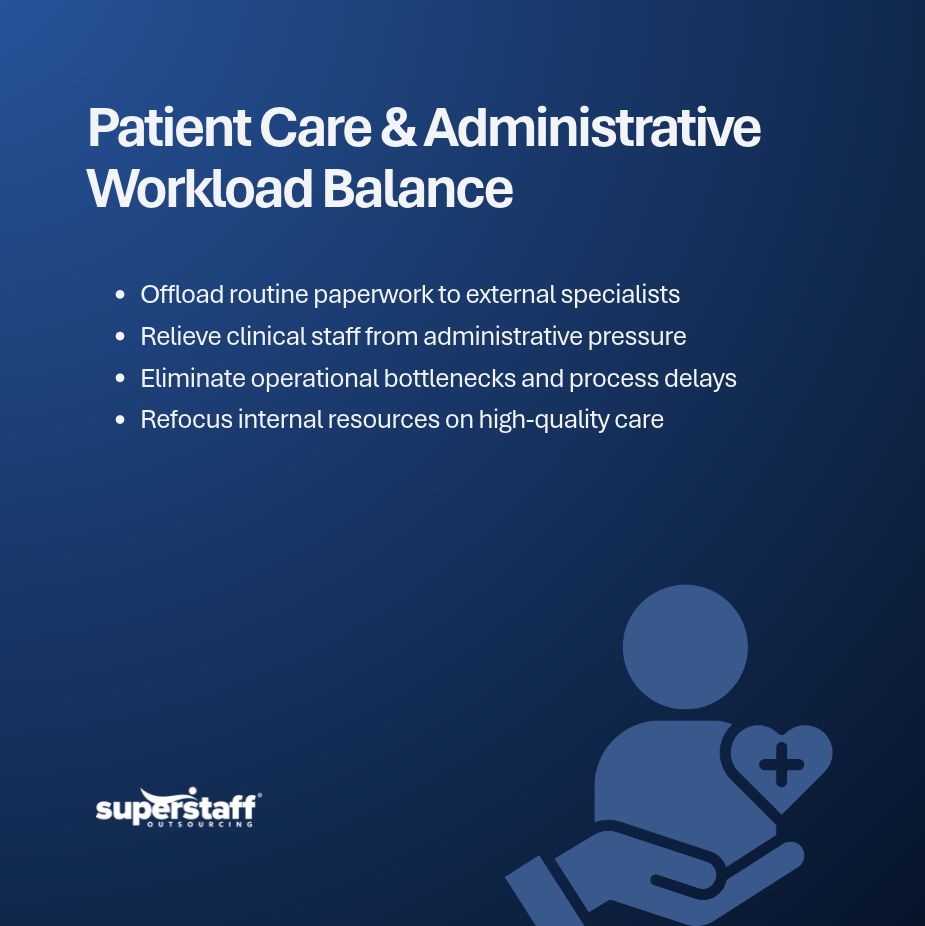
Many providers use healthcare back office outsourcing to improve operational performance while supporting internal teams. External professionals can take responsibility for selected administrative tasks, helping healthcare organizations manage growing workloads without placing additional pressure on clinical staff.
1. Increased Administrative Capacity
Healthcare back office outsourcing provides additional support for routine administrative tasks. As a result, organizations can manage growing workloads more effectively.
Teams gain the resources needed to maintain productivity, particularly during periods of increased patient demand.
2. Improved Operational Efficiency
Outsourced professionals can assist with documentation, billing support, scheduling, and other administrative functions.
Consequently, healthcare organizations can streamline workflows and reduce delays. Dedicated support also helps internal employees spend less time on repetitive tasks.
3. Better Workforce Utilization
Healthcare back office outsourcing allows clinical teams to focus on patient care instead of administrative responsibilities.
Therefore, providers can improve resource allocation across departments and give employees more time to handle responsibilities that require their direct attention.
4. Greater Flexibility During Growth
Healthcare organizations often experience changing patient volumes. Outsourcing support makes it easier to adapt to these fluctuations.
As a result, providers can maintain service quality without immediately expanding their permanent workforce.
5. Enhanced Patient Experience
Efficient administrative processes contribute to smoother patient journeys. Consequently, patients can receive faster responses and more consistent assistance.
A study published in Health Services Research also found that administrative tasks can create barriers to receiving care. The research on patient administrative burden in the US healthcare system highlights how difficulties with scheduling, information requests, and billing can contribute to delayed or missed care.
Identify Which Administrative Tasks Need Support
Not every healthcare function needs to be outsourced. Providers should first review their current workflows and identify tasks that take up significant staff time without requiring direct clinical involvement.
Common areas to assess include:
- Patient registration and intake
- Insurance eligibility verification
- Medical billing and claims processing
- Appointment scheduling and follow-ups
- Medical records management
- Data entry and documentation
- Patient inquiries and administrative communication
Healthcare leaders should also consider the volume, complexity, and sensitivity of each task. This helps determine which responsibilities can be assigned to an external team and which should remain with internal employees.
Building Stronger Support for Healthcare Operations
Healthcare organizations need effective systems that support both patient care and administrative performance. As operational demands continue to increase, providers must find ways to manage workloads efficiently while maintaining service quality.
A useful starting point is reviewing how existing teams handle documentation, billing, patient coordination, and other nonclinical responsibilities. Healthcare back-office support services can help providers understand how dedicated administrative professionals support daily operations and give clinical employees more time to focus on patients.
Keep Clinical and Administrative Teams Connected
Outsourcing administrative work should not create a separation between internal employees and external support staff. Both teams need clear procedures, reliable communication channels, and access to the information required to complete their responsibilities.
Healthcare providers should establish clear task assignments, escalation procedures, and quality standards. Regular meetings and performance reviews can also help identify workflow problems before they affect patients.
When internal and outsourced teams work within the same processes, organizations can maintain better coordination and avoid unnecessary delays.
Healthcare Back Office Support for Better Operations
SuperStaff helps healthcare organizations manage administrative workloads through specialized healthcare outsourcing solutions. Dedicated teams can assist with patient intake, insurance verification, medical billing, claims processing, documentation, and other nonclinical functions.
These services give healthcare providers additional operational capacity while helping internal employees focus on clinical responsibilities and patient needs.
Strengthen the Connection Between Care and Operations
Healthcare organizations need both effective clinical teams and reliable administrative support. When routine tasks become difficult to manage, the effects can reach every department, from the front desk to the clinical team.
Healthcare back office outsourcing offers a practical way to address these challenges. By assigning selected administrative responsibilities to trained professionals, providers can improve workflow efficiency, manage workloads, and support a better patient experience.
If your organization needs help managing administrative demands while keeping patient care a priority, contact SuperStaff to discuss your requirements and find a support solution that fits your operations.