Finding skilled employees has become a major challenge for businesses across many industries. Companies need people with the right experience and skills, but qualified candidates are not always easy to find. Some positions remain open for months, while existing employees take on extra work to keep operations running. These problems can affect productivity, hiring costs, and business growth.
Rather than waiting for the labor market to improve, leadership teams are changing how they build and manage their workforce. They are looking beyond local hiring, investing in employee development, and considering flexible staffing options. Many are also working with external providers to access skills that are difficult to find internally. These changes help businesses manage persistent talent constraints while preparing for future workforce needs.
Why Leadership Strategies Are Changing
Business leaders know that hiring challenges require more than posting job openings and waiting for applications. They need a workforce plan that considers current staffing needs, future business goals, and the skills their teams may need next.
The World Economic Forum’s Future of Jobs Report 2025 highlights how employers are responding to changing skill needs through workforce strategies such as reskilling, upskilling, and talent development. These findings show why companies must adjust their hiring and training plans as business requirements change.
1. Expanding Talent Beyond Local Markets
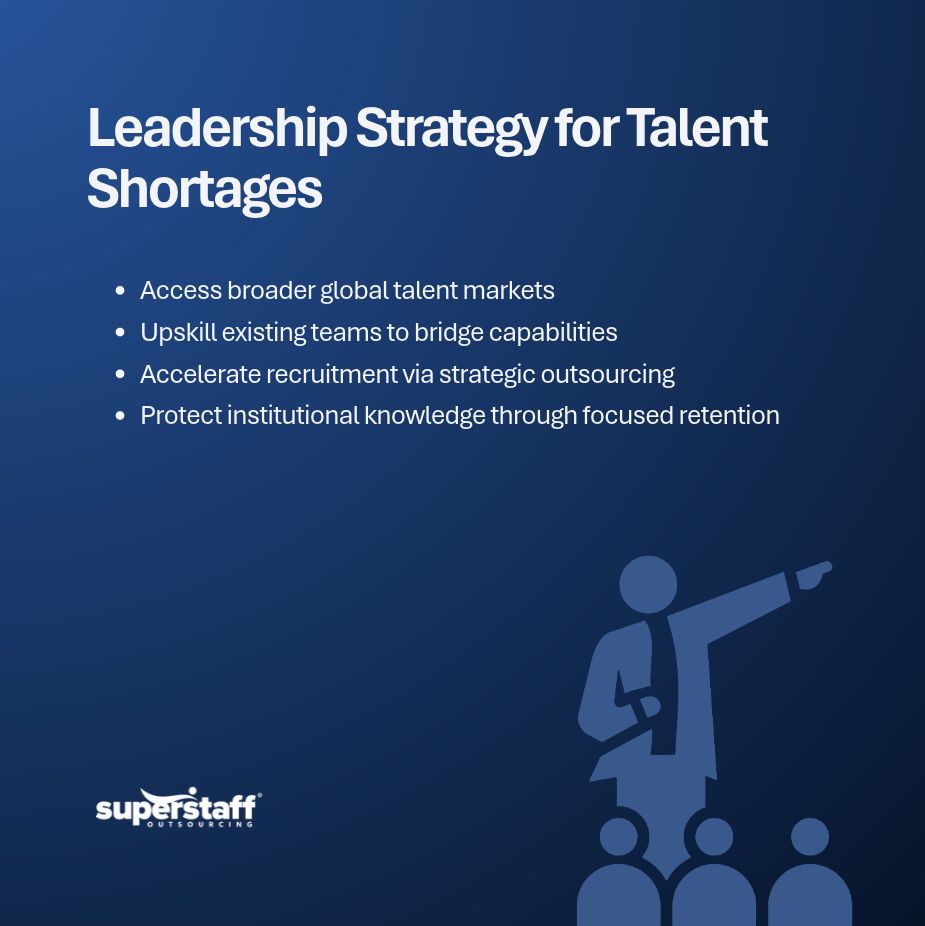
Many companies no longer limit recruitment to one city or country. They search for qualified professionals in other locations, including markets with strong talent pools and relevant industry experience.
A wider search gives businesses more options when local recruitment does not produce the right candidates. It can also help companies fill specialized positions and build teams with different skills.
2. Investing in Employee Development
Hiring new employees is not the only way to address skill shortages. Leadership teams can also train current employees to handle new responsibilities and use updated tools.
Training programs, mentoring, and professional development help employees improve their skills while giving businesses a stronger internal talent pool. This approach can also reduce the need to recruit externally for every new role.
3. Offering More Flexible Work Arrangements
Flexible schedules and remote work options allow companies to consider candidates from different locations. These arrangements can also help employees manage their personal responsibilities while meeting work expectations.
For businesses, flexibility can widen the available talent pool and make certain roles more attractive to qualified applicants.
4. Planning Workforce Needs Earlier
Waiting until a position becomes vacant can leave teams struggling to manage their workloads. Leadership teams are increasingly reviewing upcoming projects, business growth plans, and expected employee turnover to identify future staffing needs.
Early workforce planning gives HR teams more time to recruit, train, and prepare employees before shortages affect operations.
Practical Solutions That Support Business Growth
Addressing talent constraints requires a mix of hiring, training, and workforce management strategies. Businesses should look at the skills they already have, identify what is missing, and decide how to fill those gaps without placing too much pressure on existing employees.
1. Build Teams Around Specific Skills
Employees perform better when they understand their responsibilities and have the right skills for their roles. Instead of expecting a small group to handle too many unrelated tasks, companies can organize teams around specific functions.
Clear responsibilities also make training easier. New employees know what they need to learn, while managers can measure performance based on defined expectations.
2. Use Workforce Data to Guide Decisions
Hiring decisions should be based on actual business needs rather than assumptions. Companies can review employee turnover, time-to-hire, workload levels, productivity, and upcoming staffing requirements.
These figures help leaders understand where shortages are happening and which roles need attention. They can also show whether current recruitment and retention efforts are producing the expected results.
3. Improve Employee Retention
Recruiting qualified employees takes time, so businesses should also make an effort to keep the people they already have. Career development, fair workloads, regular feedback, and recognition can help employees feel supported.
Retention also protects valuable knowledge. Experienced employees understand company processes and customer expectations, which can be difficult and expensive to replace.
4. Make Recruitment More Efficient
Long hiring processes can cause qualified candidates to accept offers elsewhere. Businesses should review each recruitment stage and remove steps that do not help assess a candidate’s suitability.
Clear job descriptions, organized interviews, timely feedback, and faster decisions can improve the candidate experience. These changes also help recruiters spend more time finding suitable applicants.
5. Strengthen Employer Branding
Candidates consider more than salary when choosing an employer. They may also look at company culture, leadership, career opportunities, and employee benefits.
Businesses should communicate what makes their workplace a good place to build a career. Sharing employee experiences and explaining development opportunities can help attract applicants who are a better fit for the organization.
How Outsourcing Helps Leadership Teams Manage Talent Constraints
Outsourcing gives companies another way to access skilled professionals when internal recruitment cannot keep up with demand. It can support existing employees rather than replace them, allowing businesses to assign routine or specialized tasks to external teams.
For companies that need additional recruitment capacity, outsourcing talent acquisition for scalable workforce planning offers a way to manage hiring needs without placing the full workload on an internal recruitment team.
1. Faster Access to Qualified Professionals
Outsourcing providers have recruitment processes and talent networks that can help businesses find suitable professionals. This can reduce the time spent building candidate pipelines from scratch.
The arrangement is especially useful when companies need additional staff for customer service, administrative support, technical work, or other functions.
2. More Flexible Staffing Levels
Business demand does not always stay the same. Some companies need additional employees during busy periods, while others require specialized support for specific projects.
Outsourcing allows businesses to adjust team sizes based on their needs. This can help leaders manage changing workloads without committing to permanent in-house hiring for every requirement.
3. Less Administrative Work
Recruitment, onboarding, payroll, and workforce administration require time and coordination. External providers can manage agreed tasks, giving internal teams more time to focus on employee development, planning, and business priorities.
Clear agreements are important so everyone understands which responsibilities belong to the company and which are handled by the provider.
4. Access to Specialized Skills
Some roles require experience that may be difficult to find in a company’s local market. Outsourcing can connect businesses with professionals who already have the skills needed for certain tasks.
This can help companies move projects forward without relying entirely on internal recruitment or extensive training.
Why Employee Retention Must Remain a Priority
Bringing in additional talent can help address immediate staffing needs, but companies should not overlook the employees who already support daily operations. If existing workers continue to face excessive workloads or limited career opportunities, turnover may create new gaps even after recruitment improves.
Leadership teams should make regular communication, training, recognition, and fair workload distribution part of their workforce plans. Businesses can also review how outsourcing in the Philippines can support employee retention when evaluating external workforce options.
The goal is to build a stable team where employees have the support they need to perform well. A good workforce strategy should address both the need to find new talent and the need to retain experienced people.
Choosing the Right Workforce Partner
Not every business has the same staffing needs. Some may need help finding candidates, while others need an established team to handle specific business functions. Before choosing an outsourcing provider, leaders should identify the roles they need to fill, the skills required, and the expected workload.
They should also review the provider’s recruitment process, training approach, performance standards, communication practices, and ability to scale. A clear agreement helps both sides understand expectations and measure results.
For companies that need structured recruitment support, Recruitment Process Outsourcing services can help manage candidate sourcing, screening, and other parts of the hiring process.
Build Strong Teams Despite Hiring Challenges
Persistent talent constraints require businesses to take a closer look at how they hire, train, and manage employees. Expanding talent searches, improving retention, using workforce data, and making recruitment more efficient can help leadership teams address staffing needs before they affect operations.
Outsourcing can also give companies access to additional skills and recruitment support when internal resources are limited. By combining these options with a clear workforce plan, businesses can keep their teams productive and prepare for future growth.
SuperStaff helps businesses build and manage teams through outsourcing, Recruitment Process Outsourcing, Employer of Record services, and other workforce solutions. Whether you need help finding qualified candidates or adding skilled professionals to your operations, our team can help you identify the right approach. Contact SuperStaff to discuss your workforce needs and explore solutions that support your business goals.