Generating leads is only the first step in sales. The real challenge is keeping a steady flow of qualified prospects moving through the pipeline every month. Many companies struggle with inconsistent outreach, limited internal resources, and difficulty reaching decision-makers. As a result, sales teams often spend too much time prospecting and not enough time closing deals.
This is where SDR outsourcing can make a significant difference. By working with experienced sales development representatives, businesses can maintain a steady prospecting process, improve lead generation efforts, and support long-term growth. SDR outsourcing helps organizations create a structured system that consistently fills the pipeline with new opportunities while allowing internal sales teams to focus on revenue-generating activities. For companies aiming to improve sales performance, SDR outsourcing provides a practical way to build consistency and scale outreach efforts effectively.
Why Consistency Matters in Sales Pipeline Management
A healthy sales pipeline requires continuous activity. Without a steady flow of qualified leads, revenue can become unpredictable and growth may slow down.
1. Creates a Predictable Flow of Opportunities
Consistent prospecting generates a regular stream of potential customers. As a result, sales teams always have opportunities to pursue instead of relying on occasional lead surges.
When businesses maintain regular outreach efforts, they reduce gaps between deals and improve forecasting accuracy.
2. Supports Better Revenue Planning
Sales leaders need visibility into future opportunities. Therefore, a consistent pipeline allows businesses to estimate future sales more accurately.
With reliable lead generation efforts, companies can make smarter budgeting and hiring decisions.
3. Reduces Pressure on Sales Closers
Account executives perform best when they focus on closing deals. However, many teams ask them to prospect and sell at the same time.
Separating prospecting from closing allows sales professionals to concentrate on high-value conversations.
4. Improves Customer Targeting
Regular outreach helps businesses gather data about their ideal prospects. Consequently, teams can refine targeting strategies and improve conversion rates.
Over time, better targeting leads to higher-quality opportunities.
5. Supports Long-Term Business Growth
A consistent pipeline provides the foundation for sustainable expansion. While short-term campaigns may create temporary results, ongoing prospecting creates lasting momentum.
Businesses that maintain pipeline consistency often experience stronger sales performance over time.
SDR Outsourcing Strategies That Deliver Better Results
Successful sales development requires more than simply making calls and sending emails. Companies need structured strategies that support long-term success.
1. Define Your Ideal Customer Profile
Before launching outreach campaigns, identify the characteristics of your best customers.
Consider factors such as:
- Industry
- Company size
- Geographic location
- Revenue range
- Key decision-makers
Clear targeting allows outsourced SDRs to focus their efforts on prospects with the highest potential.
2. Build a Multi-Channel Outreach Process
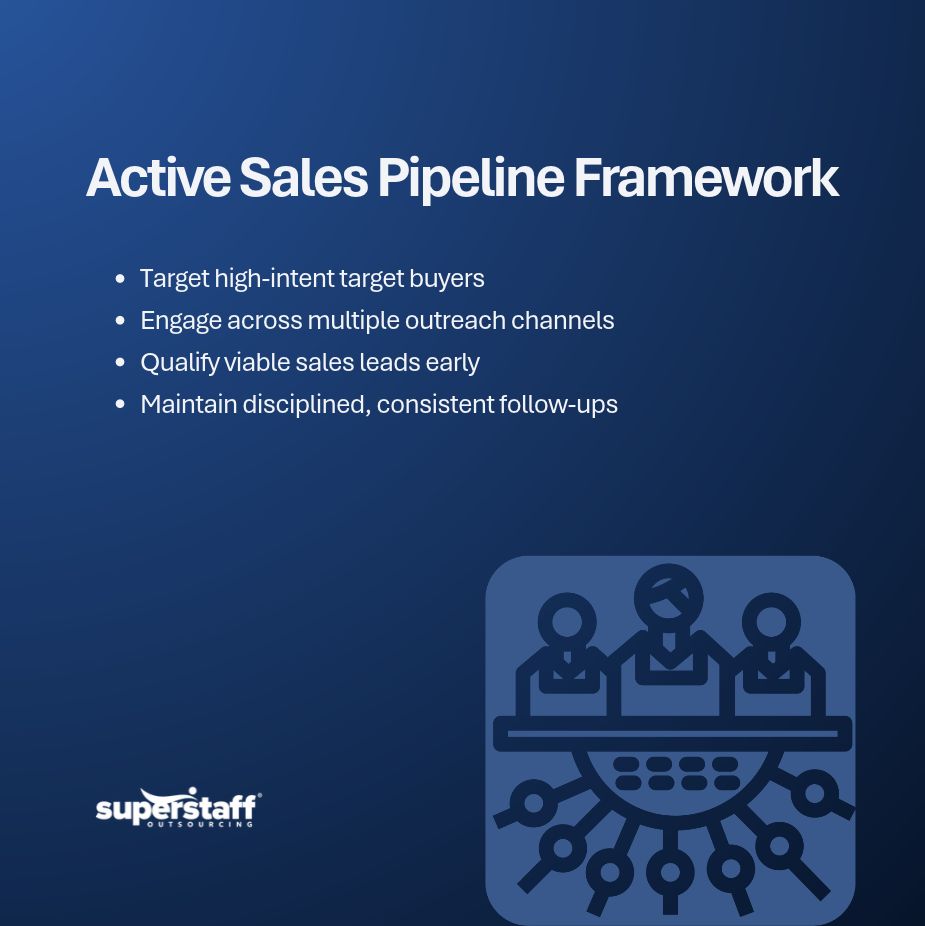
Prospects respond differently to various communication methods. Therefore, successful SDR teams use multiple channels to connect with buyers.
A balanced outreach strategy may include:
- Email campaigns
- Phone calls
- LinkedIn engagement
- Personalized follow-ups
- Appointment-setting efforts
This approach increases visibility and improves response rates.
3. Develop Consistent Messaging
Prospects receive countless sales messages every day. As a result, generic communication often gets ignored.
Businesses should create messaging that clearly addresses customer challenges and highlights potential solutions. Consistent messaging also helps SDR outsourcing teams represent the brand accurately across all interactions.
4. Establish Clear Qualification Criteria
Not every lead is ready for a sales conversation. Therefore, businesses should define qualification standards before outreach begins.
Common qualification factors include:
- Budget
- Business need
- Decision-making authority
- Purchase timeline
Clear criteria help SDR teams identify leads that deserve immediate sales attention.
5. Measure Outreach Performance Regularly
Sales development success depends on continuous improvement. Businesses should track important metrics and review performance regularly.
Useful measurements include:
- Emails sent
- Call volume
- Response rates
- Meetings booked
- Qualified opportunities generated
These insights help teams refine their approach and improve results.
Businesses looking to strengthen their prospecting process can also use outsourced sales support to help with lead research, prospect qualification, CRM updates, and other activities that keep opportunities moving through the pipeline.
How SDR Outsourcing Supports Sales Team Efficiency
Many organizations choose SDR outsourcing because it improves productivity across the entire sales process. Instead of dividing attention between prospecting and closing, teams can focus on their core responsibilities.
1. Accelerates Lead Generation Efforts
Outsourced SDRs dedicate their time to finding and engaging prospects. Consequently, businesses can increase outreach volume without overloading internal teams.
This creates more opportunities for sales representatives to pursue.
2. Expands Market Coverage
Many businesses limit outreach due to staffing constraints. However, outsourced teams can support expansion into new industries, regions, and customer segments.
Greater market coverage often leads to increased revenue opportunities.
3. Improves Follow-Up Consistency
Many potential deals disappear because follow-up efforts stop too early. Consistent communication helps keep prospects engaged throughout the buying journey.
Outsourced SDRs can maintain regular contact while sales teams focus on active opportunities.
4. Provides Access to Experienced Talent
Building an internal SDR team requires recruiting, training, and ongoing management. In contrast, outsourcing partners often provide trained professionals who can contribute after completing the necessary onboarding.
This allows businesses to add prospecting capacity without managing every part of recruitment and training internally.
5. Supports Scalable Growth
As demand increases, businesses need flexible solutions. SDR outsourcing allows organizations to scale outreach efforts without significantly increasing internal overhead.
This flexibility supports growth while maintaining efficiency.
Common Mistakes to Avoid When Outsourcing SDR Functions
While outsourcing offers many advantages, companies should avoid common mistakes that can limit results.
1. Focusing Only on Volume
High activity levels do not always produce quality opportunities. Businesses should prioritize lead quality alongside outreach quantity.
2. Ignoring Sales and Marketing Alignment
Sales development works best when marketing and sales teams share common goals. Regular communication helps ensure messaging remains consistent.
3. Using Generic Prospect Lists
Poor targeting can waste time and resources. Companies should continually refine prospect databases to improve results.
4. Neglecting Performance Reviews
Regular reporting helps identify strengths and weaknesses. Ongoing evaluation allows teams to make adjustments before problems grow.
5. Choosing Partners Without Industry Experience
Industry knowledge improves conversations and prospect engagement. Businesses should work with providers that understand their target market.
Measuring the Results of an Outsourced SDR Team
A successful SDR program should be measured by the quality of opportunities it creates, not just the number of calls or emails completed.
Businesses should monitor several performance indicators:
- Contact rate: The percentage of prospects who respond to outreach.
- Meeting booking rate: The number of meetings scheduled from outreach activities.
- Meeting attendance rate: The percentage of scheduled meetings that prospects actually attend.
- Lead qualification rate: The share of contacted prospects that meet the company’s qualification criteria.
- Pipeline contribution: The value of opportunities generated through SDR activities.
- Conversion rate: The percentage of qualified opportunities that progress to the next sales stage.
Sales leaders should also review how well outsourced SDRs work with internal account executives. The State of Sales Development 2026 report examines SDR team structures, pipeline contribution, and the use of outsourced sales development teams.
Keep Follow-Ups Consistent Throughout the Sales Cycle
A prospect may not respond to the first email or call. That does not always mean there is no interest. Sometimes, buyers need more time, have competing priorities, or simply miss the initial message.
An organized follow-up schedule helps businesses stay in contact without overwhelming prospects. SDRs should record previous conversations, note important details, and plan the next contact based on the prospect’s response.
Appointment setting is also an important part of this process. Businesses can use structured appointment-setting support to coordinate meetings, manage follow-ups, and help sales representatives connect with prospects who are ready for a conversation.
Align Your SDR Team With Internal Sales Representatives
Outsourced SDRs should work closely with the company’s internal sales team. Both groups need to understand the ideal customer profile, qualification standards, messaging, and meeting requirements.
Create a clear handoff process so account executives receive useful information before speaking with a prospect. This may include the prospect’s business needs, previous interactions, decision-making role, and reason for considering the product or service.
Regular meetings between SDRs and sales leaders can also help identify weak points in the pipeline. If meetings are not converting into opportunities, both teams can review targeting, messaging, and qualification methods.
Sales Support for a More Organized Pipeline
Prospecting is only one part of sales development. Businesses also need accurate CRM records, timely follow-ups, organized schedules, and clear reporting to keep opportunities moving.
Companies can build additional capacity through dedicated sales support and outsourcing teams. These teams can assist with lead management, appointment coordination, and sales administration while internal representatives focus on client conversations and closing deals.
Build Stronger Pipelines With the Right Sales Support
A consistent sales pipeline does not happen by accident. It requires ongoing prospecting, clear processes, targeted outreach, and continuous follow-up. SDR outsourcing helps businesses maintain these activities while allowing internal sales teams to focus on closing deals and building customer relationships.
SuperStaff provides skilled sales development and support professionals who can assist with lead generation, appointment setting, prospect qualification, and pipeline management. If your business wants to strengthen its sales process and achieve more predictable results through SDR outsourcing, contact SuperStaff to discuss the right support for your sales goals.