Construction projects depend on the right people, accurate planning, and strong coordination. However, many companies struggle to find skilled workers while also managing growing administrative demands. As projects become larger and timelines become tighter, these challenges can slow operations and increase costs.
Many construction firms are looking for practical ways to keep projects moving without overloading their internal teams. As a result, outsourcing for construction companies has become a reliable option for filling workforce gaps and handling essential support functions. From recruitment to back-office tasks, outsourcing helps businesses maintain productivity and focus on project delivery.
Why Construction Companies Need Additional Support
Construction businesses often face staffing shortages and administrative bottlenecks at the same time. While field teams focus on project execution, office staff handle scheduling, documentation, payroll, and compliance requirements.
1. Skilled Labor Remains Difficult to Find
Many regions continue to experience shortages of qualified construction workers. As experienced professionals retire, companies struggle to replace them with new talent.
A 2025 workforce survey by the Associated General Contractors of America and the National Center for Construction Education and Research found that 92% of construction companies surveyed had difficulty filling positions. These shortages can affect project schedules and increase pressure on existing employees. The 2025 construction workforce survey provides further details on these hiring challenges.
Consequently, project managers spend more time recruiting and less time overseeing operations. This can delay projects and affect profitability.
2. Administrative Work Continues to Grow
Construction projects generate a large amount of paperwork. Teams must manage contracts, permits, invoices, reports, and employee records.
As administrative demands increase, internal employees often become overwhelmed. Therefore, companies may experience delays in processing important documents.
3. Project Timelines Leave Little Room for Delays
Construction clients expect projects to stay on schedule. Even small staffing issues can affect deadlines and create additional expenses.
Because of this, companies need flexible solutions that help maintain workforce capacity when demand changes.
4. Rising Labor Costs Affect Budgets
Hiring full-time employees for every role can significantly increase operating costs. Salaries, benefits, training, and equipment add to overall expenses.
Therefore, many companies seek cost-effective alternatives that still provide access to qualified professionals.
5. Internal Teams Need Greater Focus
Managers and supervisors should spend their time leading projects and serving clients. However, administrative responsibilities often pull them away from these priorities.
With additional support, leadership teams can focus on project quality, safety, and growth opportunities.
How Outsourcing Helps Fill Workforce Gaps
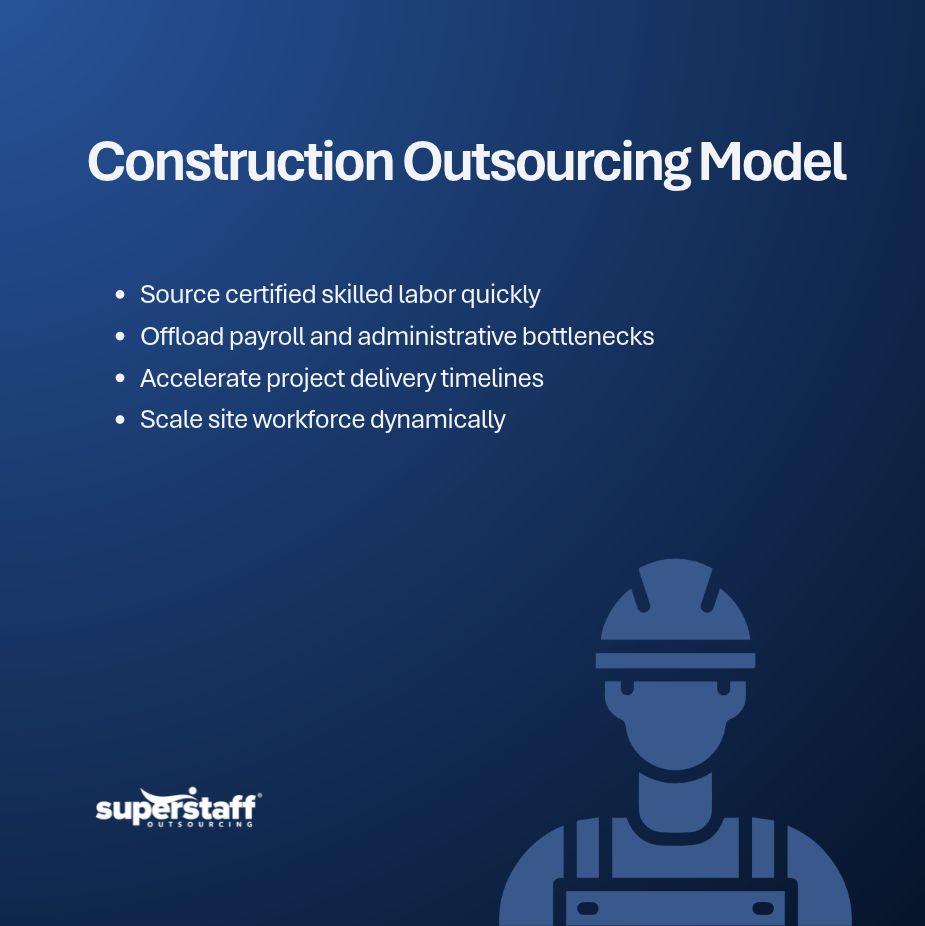
Many construction firms use external support to strengthen operations without expanding their permanent workforce. Outsourcing provides flexibility while helping companies maintain productivity.
1. Access to Qualified Talent Faster
Recruitment can take weeks or even months. Outsourcing providers often maintain networks of experienced professionals who are ready to work.
As a result, companies can fill positions faster and reduce hiring delays.
2. Support During Seasonal Demand
Construction workloads often fluctuate throughout the year. Some projects require additional staff for short periods, while others demand long-term support.
Outsourcing allows businesses to adjust staffing levels based on project needs without making permanent hiring commitments.
3. Reduced Recruitment Burden
Finding candidates, reviewing applications, and conducting interviews require significant time and resources.
Through outsourcing for construction companies, businesses can transfer many of these responsibilities to dedicated recruitment specialists, allowing managers to focus on operations.
4. Better Workforce Scalability
Growth often creates staffing challenges. When companies win multiple projects at once, they may need additional workers quickly.
Outsourcing makes it easier to scale teams without overwhelming internal hiring departments.
5. Improved Business Continuity
Unexpected employee absences or turnover can affect project progress. However, outsourced support helps companies maintain coverage and minimize disruptions.
This allows projects to continue moving forward even during staffing changes.
Administrative Functions That Can Be Outsourced
Administrative support plays an important role in construction success. Many routine tasks can be handled by outsourced professionals, giving internal employees more time to manage project priorities.
1. Payroll Processing
Payroll requires accuracy and consistency. Construction companies must track employee hours, overtime, and project allocations.
Outsourced payroll specialists can help process payments and maintain organized payroll records.
2. Document Management
Construction firms handle contracts, permits, inspection reports, and compliance records. Keeping these documents organized helps teams find important information when they need it.
Outsourced administrative staff can assist with document processing, file organization, and record updates. Companies can also use back-office support and data entry services to manage recurring administrative tasks without adding more work to their internal teams.
3. Scheduling and Coordination
Project schedules require constant updates. Teams must coordinate workers, subcontractors, suppliers, and inspections.
Administrative support professionals can help manage schedules and maintain communication across multiple stakeholders.
4. Data Entry and Reporting
Accurate project information supports better decision-making. However, data entry can consume valuable staff time.
Outsourced teams can maintain databases, prepare reports, and keep records updated.
5. Customer and Vendor Support
Construction companies regularly communicate with clients, suppliers, and subcontractors.
Administrative professionals can handle inquiries, process requests, and provide ongoing support, improving overall efficiency.
Key Benefits of Outsourcing for Construction Companies
Construction firms continue to adopt outsourcing because it offers practical operational advantages. When businesses assign suitable tasks to external teams, they can manage workloads more effectively and use internal resources where they are needed most.
1. Greater Operational Efficiency
Outsourced teams handle repetitive and time-consuming tasks. Therefore, internal employees can focus on higher-value responsibilities.
This improves productivity across the organization.
2. Better Cost Management
Businesses can pay for the services they need instead of hiring full-time employees for every support role. As a result, they can manage labor expenses while maintaining access to essential operational support.
This creates greater flexibility when managing budgets.
3. Increased Project Focus
Project leaders can dedicate more attention to site operations, quality control, and client relationships.
Meanwhile, outsourced professionals manage administrative functions behind the scenes.
4. Faster Business Growth
Companies can pursue new projects without worrying about immediate staffing limitations.
With reliable support systems in place, expansion becomes easier to manage.
5. Stronger Competitive Position
Businesses that operate efficiently often deliver projects faster and provide better service.
As a result, they can strengthen client relationships and improve their market position.
Managing Outsourced Teams Effectively
Outsourcing works best when companies set clear expectations and maintain regular communication with their service providers. Before assigning tasks, identify which activities need support, what results are expected, and who will review completed work.
Construction firms should also provide access to the right systems, establish communication schedules, and set quality standards. These steps help external staff follow existing procedures and keep project information organized.
For companies managing several projects at once, additional administrative support can help with documentation, scheduling, reporting, and other routine responsibilities. This type of support can also help internal teams stay organized during busy project periods.
Choosing the Right Outsourcing Partner
Not every outsourcing provider offers the same services or level of support. Construction companies should review potential partners carefully before making a decision.
Consider these factors:
- Experience supporting construction or engineering businesses
- Ability to provide the specific roles and services required
- Clear communication and reporting processes
- Data protection and confidentiality practices
- Flexible staffing arrangements
- Transparent pricing and service agreements
It is also important to discuss how the provider handles employee training, performance reviews, and changes in workload. A clear agreement helps both sides understand their responsibilities and avoid confusion once the work begins.
Construction Outsourcing Support for Growing Firms
Construction companies need support that matches the demands of their projects. SuperStaff provides outsourcing solutions for construction and engineering firms through dedicated professionals who can assist with project administration, procurement tracking, subcontractor coordination, documentation, and reporting.
This support gives construction teams additional capacity without requiring them to handle every administrative task internally. Companies can focus more on project execution while outsourced staff help keep daily operations organized.
Keep Projects and Office Operations on Track
Once an outsourcing arrangement is in place, companies should review its performance regularly. Check whether assigned tasks are completed on time, records are accurate, and communication between internal and external teams remains clear.
It is also useful to review workloads as projects change. A company that needs help with payroll and documentation today may require additional scheduling or reporting support during its next project. Regular reviews help ensure that outsourced services continue to match business needs.
Build Stronger Construction Operations With Expert Support
Labor shortages and administrative demands can create serious challenges for growing construction firms. However, outsourcing for construction companies provides access to skilled support, administrative expertise, and flexible staffing options that help businesses maintain productivity and meet project goals.
Whether your company needs recruitment assistance, payroll management, scheduling support, or back-office services, the right outsourcing partner can help reduce operational pressure and improve efficiency. SuperStaff provides customized outsourcing solutions that support construction companies at different stages of growth.
If your business needs additional support for its projects and daily operations, contact SuperStaff to discuss your requirements and find an outsourcing solution that fits your goals.