Every business wants steady growth, better results, and long-term stability. However, reaching these goals takes more than increasing sales or hiring additional employees. Companies also need to review how work gets done, manage resources carefully, and make sure their teams can keep up with changing demands.
This is where business performance improvement comes in. It helps organizations find problems in their processes, improve productivity, manage costs, and deliver better customer experiences. Instead of making major changes without a clear plan, businesses can focus on smaller improvements that produce measurable results over time.
Whether a company wants to expand into new markets or improve its current operations, a structured approach can help leaders make better decisions. The following playbook covers practical ways to improve performance while keeping long-term business goals in focus.
Build a Strong Foundation for Growth
Before making changes, businesses need to understand where they stand and what they want to achieve. A strong foundation gives employees clear direction and helps managers decide which improvements deserve attention.
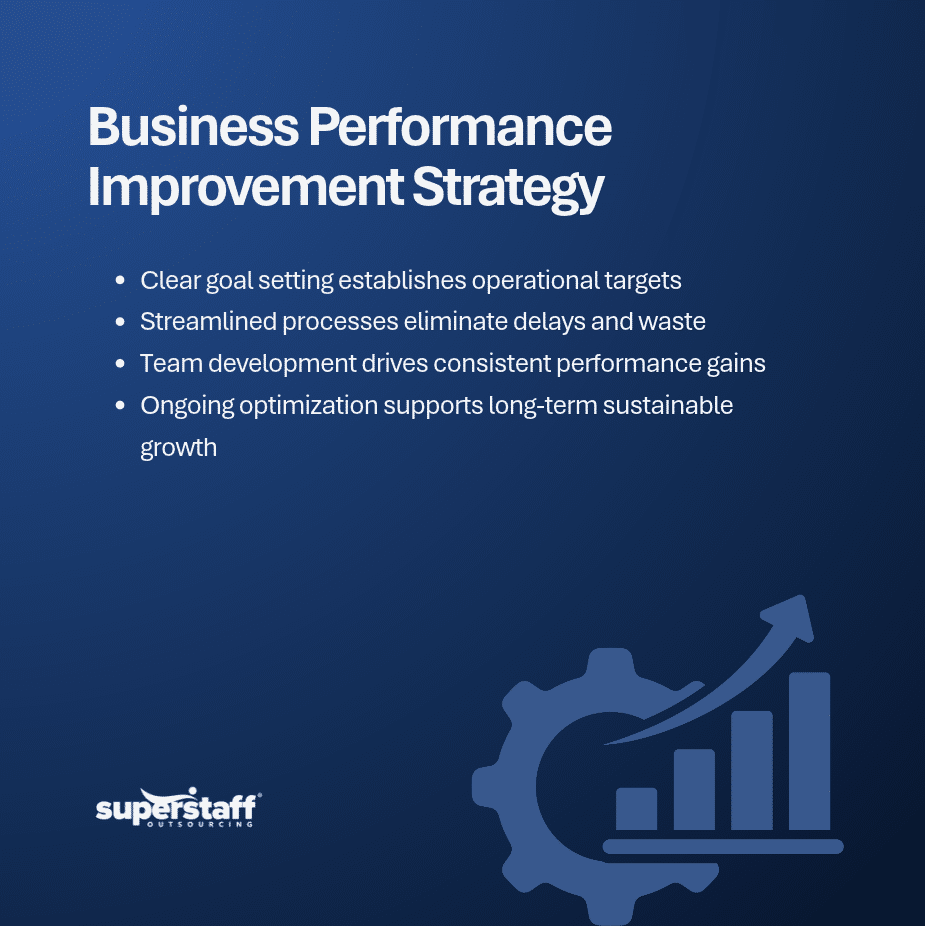
1. Set Clear Business Goals
Employees work more effectively when they understand what the company wants to accomplish. Set goals that connect daily responsibilities with wider business priorities.
For example, a company may want to increase customer retention, reduce order processing time, or improve monthly sales. Make these goals specific and measurable so teams can track their progress.
2. Track the Right Performance Indicators
Business leaders need accurate information to understand how well their organization is performing. However, tracking too many metrics can make it harder to identify the numbers that matter.
Focus on indicators related to revenue, customer satisfaction, employee productivity, operating costs, and service quality. The NIST Baldrige Criteria also emphasizes using performance measurement and regular reviews to support business goals and identify areas that need improvement.
3. Define Roles and Responsibilities
Unclear responsibilities can lead to duplicated work, missed deadlines, and confusion between departments. Every employee should understand what they are responsible for and how their work contributes to team goals.
Managers should provide clear instructions, set reasonable expectations, and give regular feedback. This helps employees stay accountable and makes it easier to identify where additional support may be needed.
4. Improve Communication Between Departments
Poor communication can slow down projects and create avoidable mistakes. For example, a sales team may promise a delivery date without checking with the operations team first.
Create clear communication channels and make sure departments share information that affects their work. Regular updates can help teams resolve issues sooner and avoid unnecessary delays.
5. Encourage Employees to Suggest Improvements
Employees often notice problems that managers may not see. They work with daily processes and understand which steps take too long or create unnecessary work.
Give employees opportunities to share suggestions. Their feedback can help identify practical changes that improve productivity and make everyday tasks easier.
Improve Daily Operations and Reduce Unnecessary Work
Once business goals are clear, companies can review their existing processes. The purpose is to find ways to complete work more efficiently without lowering quality or placing additional pressure on employees.
1. Review Existing Workflows
Some companies continue using outdated processes simply because they have followed them for years. These procedures may involve unnecessary approvals, repeated data entry, or manual steps that no longer serve a clear purpose.
Review each process and identify where time and resources are being wasted. Remove steps that do not add value and update procedures that slow down work.
2. Address Process Bottlenecks
A bottleneck occurs when one part of a process slows down everything that follows. For example, a customer order may remain unfinished because it requires approval from a department that already has a large backlog.
Find out where delays happen and determine what causes them. Businesses can then adjust workloads, improve approval procedures, or provide additional resources to keep work moving.
3. Invest in Employee Training
Employees need the right skills to perform their jobs well. As business systems and customer expectations change, workers may also need additional training.
Provide practical learning opportunities that match their responsibilities. Training can cover new software, customer service procedures, technical skills, and updated company processes.
4. Use Technology Where It Makes Sense
Technology can reduce repetitive work and help employees access information faster. Automation tools, reporting systems, and shared work platforms can support daily operations.
However, businesses should choose tools based on actual needs. Introducing software without reviewing existing processes may create additional steps instead of solving the problem.
5. Consider Outsourcing Non-Core Functions
Administrative work, data entry, customer support, and other recurring tasks can take time away from a company’s main priorities. Outsourcing selected functions allows internal employees to focus on responsibilities that require direct business knowledge and decision-making.
Companies can also look at how operations outsourcing helps manage recurring workflows, improve task distribution, and provide additional staffing capacity.
The key is to choose processes that are suitable for external support and establish clear expectations for quality, security, and performance.
Improve Customer Experience and Team Performance
Operational improvements should also benefit customers and employees. Faster internal processes mean little if customers still experience long waiting times or inconsistent service.
1. Listen to Customer Feedback
Customer feedback can reveal problems with products, services, communication, and support processes. Review complaints, surveys, and recurring inquiries to understand what needs attention.
Use these findings to improve the customer journey. Even small changes, such as clearer instructions or faster follow-ups, can make a difference.
2. Make Customer Support More Efficient
Customers expect businesses to respond promptly and provide useful answers. Support teams need clear procedures, accurate information, and the right tools to manage inquiries.
Review response times, resolution rates, and customer satisfaction scores. These measures can help identify where additional training or process changes are necessary.
3. Support Employee Productivity
Employees perform better when they have the tools, information, and support needed to complete their work. Unclear instructions and unnecessary manual tasks can reduce productivity.
Managers should regularly check whether employees have manageable workloads and access to the resources they need. Improving these areas can help teams maintain better performance.
4. Recognize Good Performance
Employees are more likely to stay engaged when their contributions are recognized. Managers should acknowledge improvements, successful projects, and consistent work.
Recognition does not always require financial rewards. Regular feedback, development opportunities, and clear career paths can also encourage employees to maintain good performance.
Plan for Long-Term Business Growth
Improving current operations is important, but businesses also need to prepare for future demands. A company that performs well today may face new challenges as its customer base, workforce, and market expand.
1. Review Workforce Requirements
As a business grows, its staffing needs may change. Some departments may need additional employees, while others may benefit from updated processes or external support.
Review workloads and identify skill gaps before making hiring decisions. This helps companies build teams that match actual business requirements.
2. Prepare for Changes in Customer Demand
Customer demand can change because of seasonal trends, new products, market conditions, or changing preferences. Businesses should monitor sales patterns and customer activity to prepare for these shifts.
Planning ahead can help companies manage inventory, staffing, and service capacity more effectively.
3. Manage Costs Without Lowering Quality
Reducing expenses should not mean cutting resources that employees and customers depend on. Instead, review operating costs and identify areas where the company can work more efficiently.
Look at supplier agreements, manual processes, staffing arrangements, and technology expenses. Make changes that improve resource use while maintaining service standards.
4. Encourage Collaboration Across Teams
Departments should not work in isolation. Sales, marketing, operations, finance, and customer service all contribute to business results.
Encourage teams to share information and coordinate their plans. Better collaboration helps prevent delays and gives managers a clearer view of how decisions affect the entire organization.
5. Review Business Strategies Regularly
A business strategy should not remain unchanged when market conditions and company priorities shift. Review performance regularly and determine whether existing plans still support the organization’s goals.
Use actual results to decide what needs to continue, change, or stop. This helps businesses stay focused without relying on outdated plans.
Key Areas to Include in Your Improvement Plan
Every organization has different priorities, but several areas deserve regular attention when reviewing business performance.
- Employee productivity: Check how effectively teams use their time and resources.
- Customer experience: Review satisfaction, response times, and service quality.
- Operational efficiency: Identify delays, unnecessary steps, and process errors.
- Cost management: Monitor expenses and look for ways to use resources better.
- Workforce planning: Make sure staffing levels and employee skills match business needs.
- Process improvement: Update procedures that slow down work or create repeated problems.
- Leadership and accountability: Set clear expectations and give employees useful feedback.
- Business scalability: Prepare systems and teams for higher workloads and future growth.
Businesses do not need to improve every area at once. Start with the problems that have the greatest effect on daily operations, then work through other priorities as resources allow.
Turn Performance Reviews Into Practical Action
Collecting performance data is only useful when managers act on what they learn. Companies should create a regular review process that turns findings into clear tasks and measurable improvements.
For example, if reports show that customer inquiries take too long to resolve, managers can review staffing levels, employee training, and support procedures. If administrative work creates delays, they can examine the workflow and consider whether automation or additional support would help.
Businesses can also use actionable business plan indicators to track progress and identify which areas need more attention.
After making changes, compare the results with the original performance levels. This makes it easier to see whether the improvement worked or whether another adjustment is necessary.
Where Outsourcing Fits Into Business Performance Improvement
Outsourcing can support business improvement when internal teams have too many responsibilities or lack the resources to manage certain functions efficiently.
For example, external teams can handle customer service, administrative tasks, data processing, recruitment support, and other recurring activities. This gives internal employees more time to focus on planning, management, and core business functions.
However, businesses should not outsource a process simply because it is difficult to manage. They should first understand the task, set clear performance standards, and decide how the external team will work with internal employees.
Managing Administrative Work as Your Business Grows
As operations expand, routine administrative work can take up more of the internal team’s time. Tasks such as data entry, document processing, record updates, and order management still need to be completed, even when employees have other priorities.
Businesses can assign selected processes to back-office support teams to help manage recurring workloads. This gives internal employees more time to focus on planning, customer relationships, and other responsibilities that need their direct involvement.
Make Business Improvement Part of Everyday Operations
Business performance improvement is an ongoing process. Companies need to set clear goals, review results, address problems, and give employees the support they need to perform well. Consistent reviews and practical adjustments can help businesses improve without creating unnecessary disruption.
Sustainable growth also requires a balance between customer needs, employee performance, operating costs, and long-term planning. When these areas work together, businesses are better prepared to manage change and maintain steady results.
SuperStaff helps businesses strengthen their operations through outsourcing solutions for customer service, back-office support, recruitment, healthcare support, and other business functions. If your organization wants to improve efficiency and manage growing workloads, contact SuperStaff to discuss a support solution that fits your business goals.